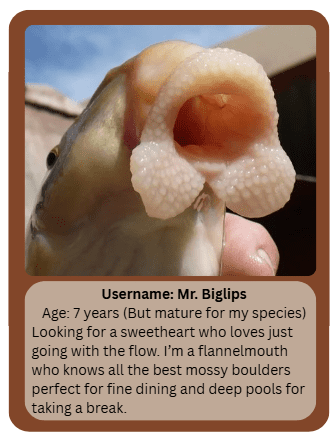
Wild Valentines
In the arena of the natural world, victory is achieved by your ability to pass on your genes. That’s why, for most species, love is war. Competition is fierce to find (and keep) a mate and territory to raise young. Usually males must compete for the attention of females, who can be rather picky. After all, a poor choice in a partner could mean failure, and some short-lived species may only get one chance. There are a fascinating variety of ways animals test their potential mates; sound, smell, appearance, physical displays of skill or brute strength. A gift or two never hurts either, if you are able to gather spare resources for a mate, you probably can provide well for any children that come along.
a romantic melody
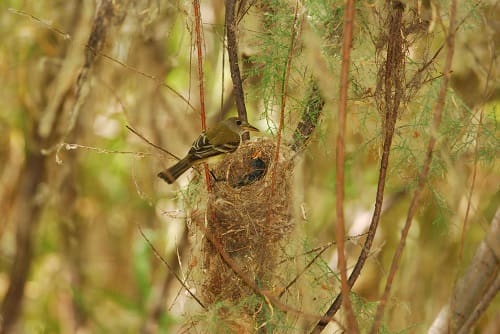
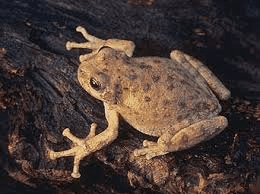
Southwestern Willow Flycatcher males begin arriving from Central America mid-April to set up territories. Like many songbirds, male flycatchers sing to lay claim to an area. A strong song intimidates rivals and impresses potential mates. It isn’t always about volume though; mockingbirds mimic the songs of other birds. Each year, a mockingbird will learn new songs to add to its repertoire. A male that has lived long enough to develop a long and varied playlist is just what a female mockingbird is looking for. Singing for a mate is not limited to birds. Consider the familiar chirping of crickets or the bleating of treefrogs in our sandstone canyons.
a little perfume
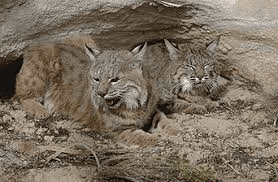
Many animals use smell to communicate when they are looking for a mate, or to mark territories. Urine or scat are convenient ways to spread pheromones, other animals like cats, or members of the deer family have scent glands on their face they rub on branches. It is even thought that some birds like dark-eyed juncos use chemicals in the oil they preen with to communicate with potential mates.
looking stylish
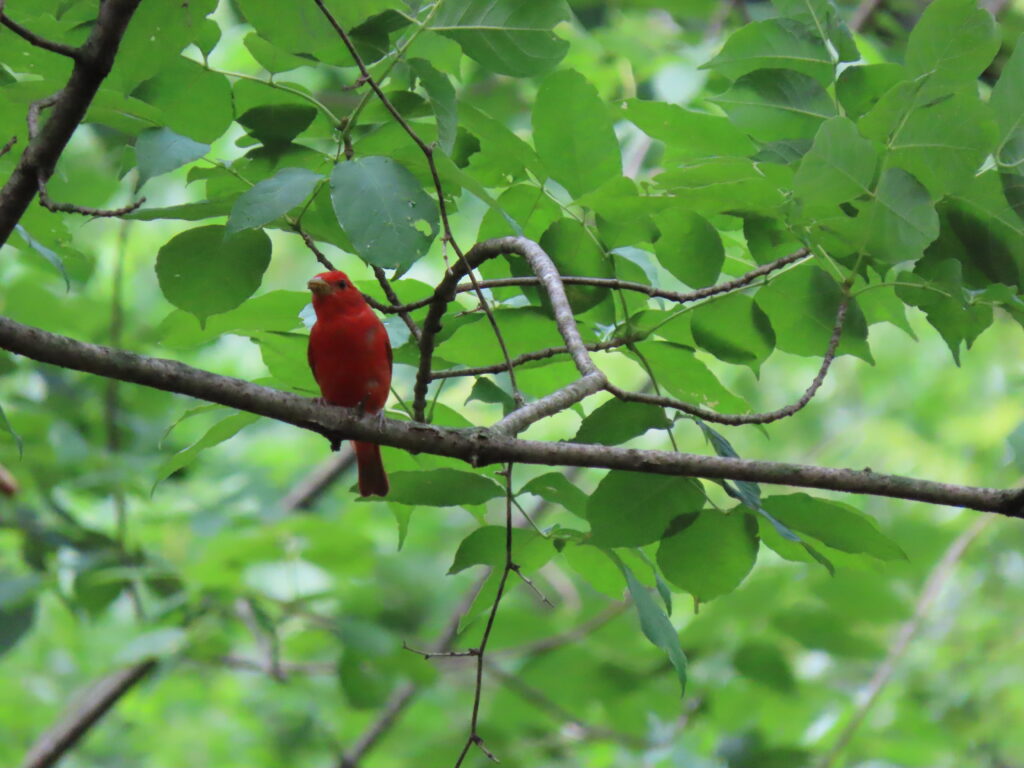
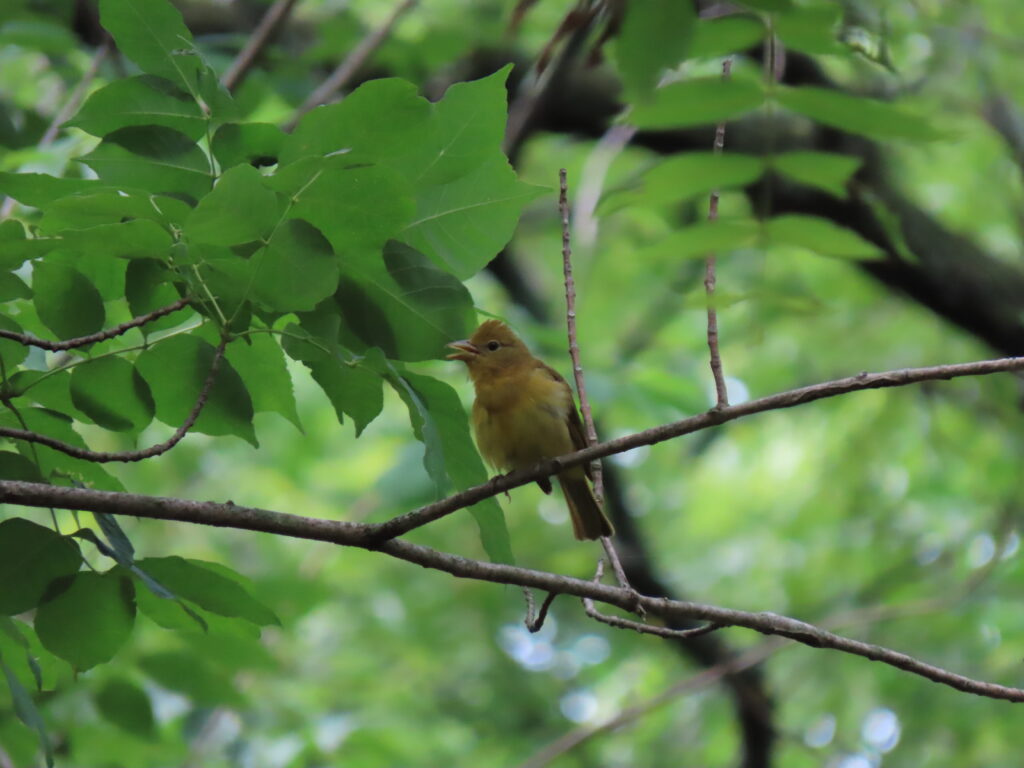
Looking perfect can be rather important. For many birds, females dress in camo, while the males sport bright feathers, long plumes and use fancy dances to show off. Summer tanagers are a pretty little bird, the males are a brilliant crimson while the females are a drab yellow. Did you know that most birds don’t have naturally red or yellow feathers? Those colors come from pigments in food. The better a male tanager is at finding quality food, the brighter red it is. A dull red tanager has no chance against a brightly colored fellow. There is a trade-off for all this finery however. It is risky in the animal kingdom to attract attention. While some animals keep their bright colors year-round, many shift to colors that allow them to hide from predators once the breeding season is over. Speckled dace are a little minnow that lives in the Virgin River and its tributaries. When it is time to find a mate, the males brighten up by putting on some red “lipstick” and red at the base of their fins. After spawning the red fades back into their normal speckled brown.
holding out for a hero
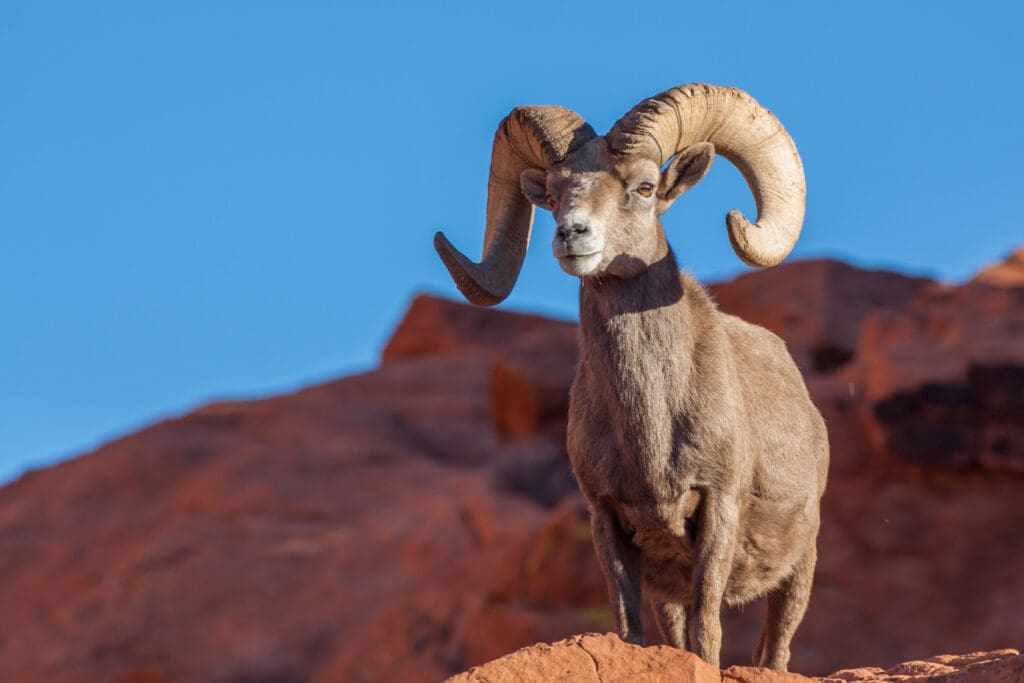
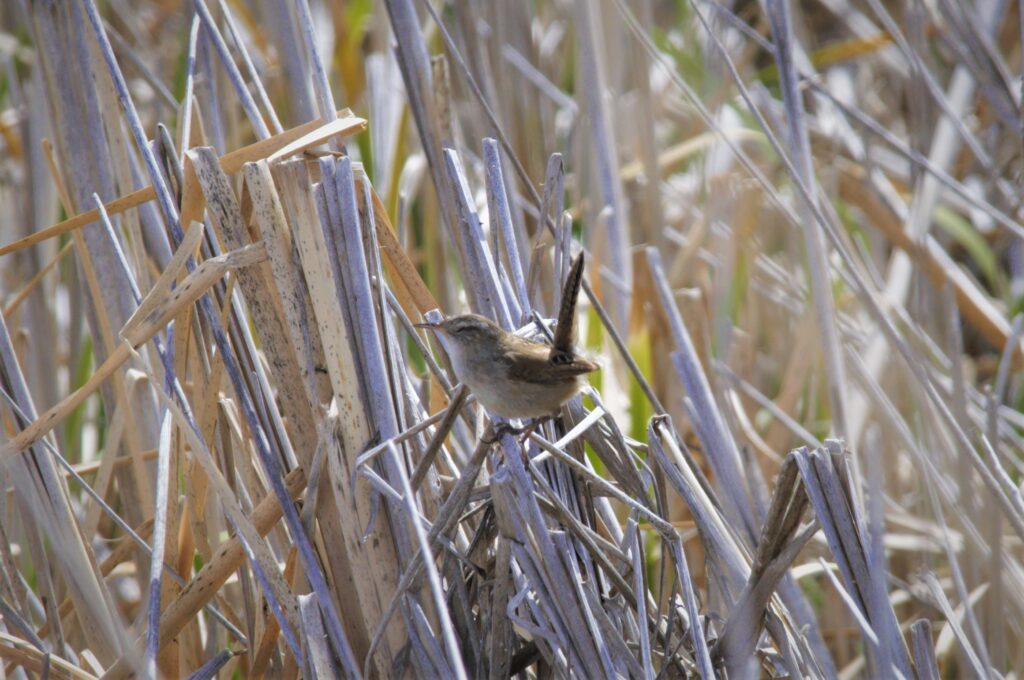
Other species prove their fitness with physical displays or tests of strength. Western Grebes are well known for their “rushing display”. During courtship a pair will speed run together across the water, wings outstretched before slowing and dropping back into the water. If you are lucky, you might spot them doing this at Sand Hollow or Quail Creek reservoirs. Sometimes fighting between males is enough of a test to prove their fitness as a mate. Bighorn sheep have special adaptations, such as a double-layer in their skull, massive neck muscles, and horns that spread out the shock of an impact. Young rams have no chance of winning a challenge until their horns reach a full curl. The tiny but fierce marsh wren proves how good a mate it could be by building nests. The male will build quite a few nests in their territory. He then will attract the attention of a female by calling and fluttering up above the reeds briefly. When a female arrives, he leads her on a tour of the nests. If a female finds a nest satisfactory the pair will then viciously defend the nesting site.
partners for life…or not?

https://commons.wikimedia.org/w/index.php?curid=94923316
Of course, with such high stakes, some shenanigans take place. Pair bonds can be strong in some species, some mate for life, others for a season, other animals are known to “cheat” on their partner. Males that can’t compete physically will sometimes mate with females while the territorial male is fighting or away. Another strategy is to literally not keep all your eggs in one basket. Cliff swallows lay eggs in their own nest, but will also lay eggs in their neighbor’s nests to increase the chance one of their young will survive, even if their own nesting attempt fails. We also have an infamous nest parasite thriving in our area. Brown-headed cowbirds do not build their own nest at all. The females lay their eggs in nests of smaller songbirds where their larger chicks have an advantage over the host’s young. Then there are species that have given up on the whole thing altogether. Our plateau-striped whiptail lizards are all female and unfertilized eggs develop as clones of the mother.
It seems that although finding a mate in the wild can be very competitive, it is much easier than trying to use an online dating profile to find what you are looking for! Happy Valentine’s Day to everyone looking, already with someone, or happily single!