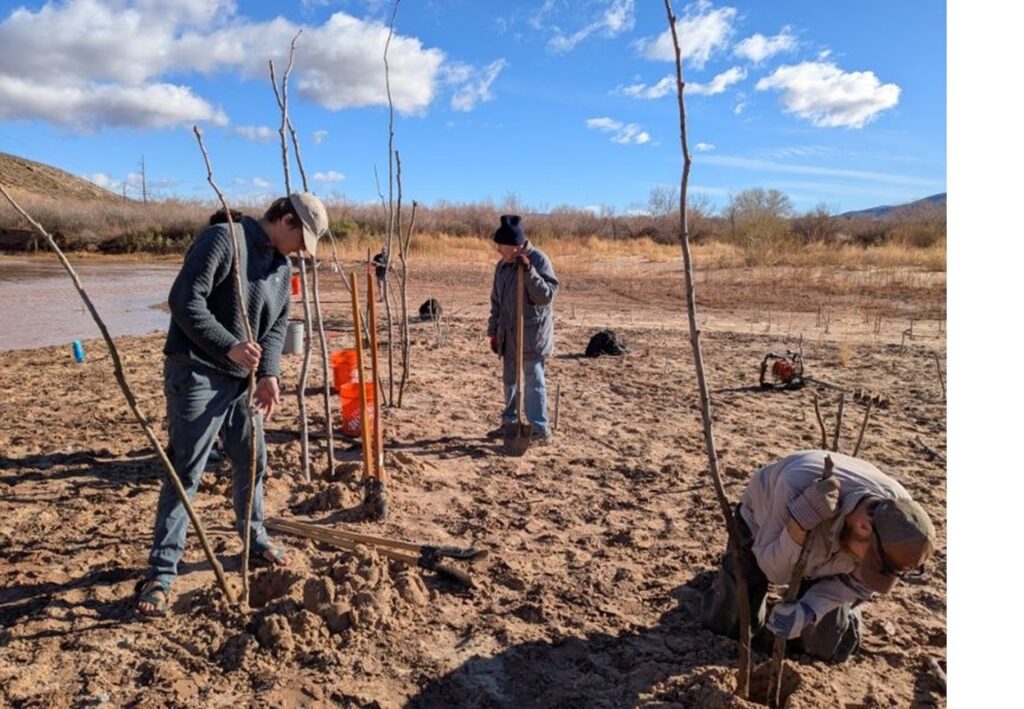
Species Spotlight: Southwestern Willow Flycatcher
While walking the trails along the Virgin River in the summer, you may be lucky enough to hear, or maybe even see an endangered Southwestern Willow Flycatcher. Currently the Virgin River Program is working with local partners and agencies to protect and restore critical willow flycatcher habitat, with some encouraging results.
All About Southwestern Willow Flycatchers
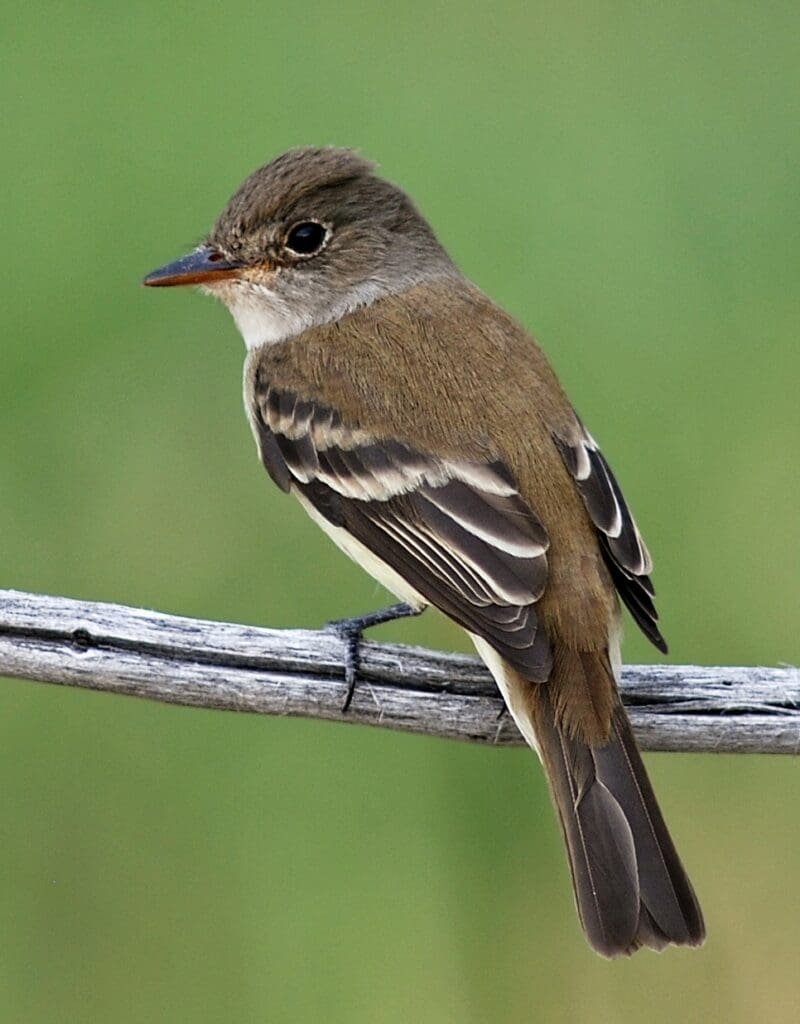
Southwestern Willow Flycatchers can be very tricky to tell apart from other closely related flycatchers of the genus Empidonax (or as birdwatchers like to call them, Empids). The song of each Empid is unique, so hearing the characteristic “fitz-bew” of a willow flycatcher during nesting season is the easiest way to positively identify them. You may hear a “whit” call as well, but this call is used by several flycatcher species. Males will perch high, throw back their head and sing once, while flicking their tail up. They listen for rivals or responses from females, then call again.
Note: Please do not play recorded calls to find Southwestern Willow Flycatchers. Playing recorded calls, especially during breeding season, can confuse and cause stress, and could attract the attention of predators or brown-headed cowbirds.
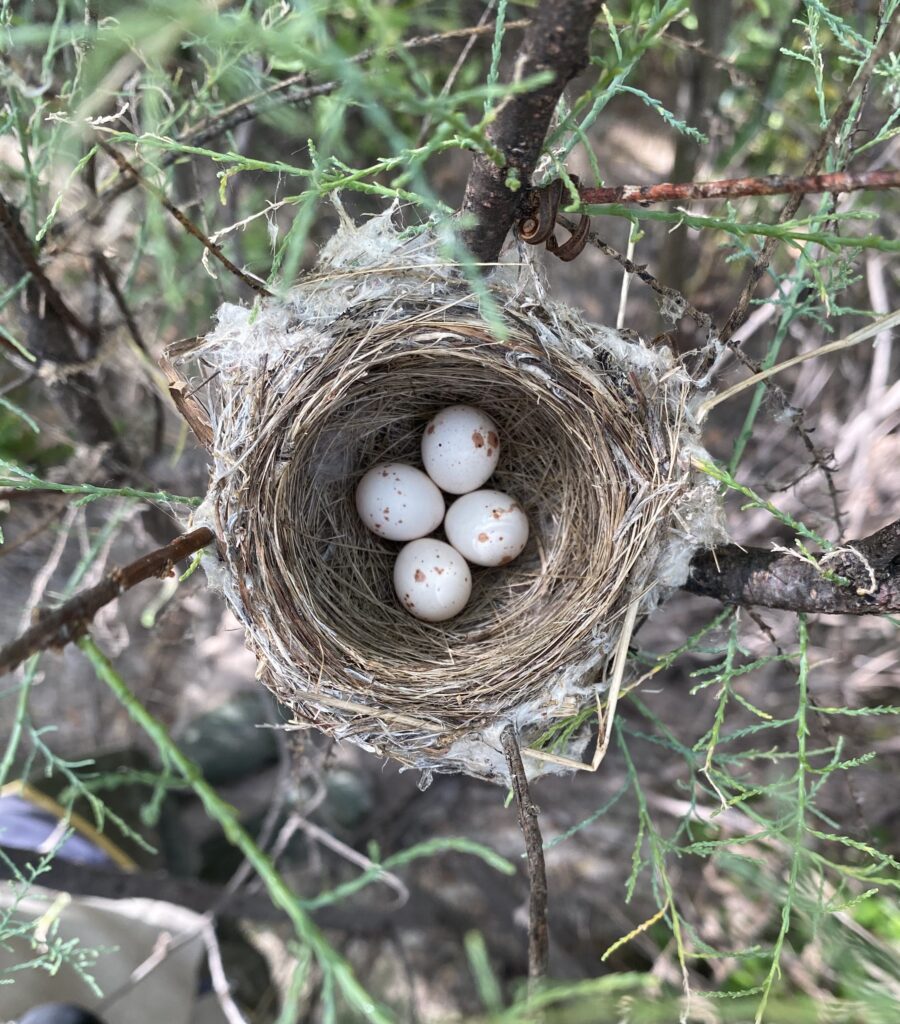
Females build a small cup shaped nest within a male’s territory in thick patches of willows. They will also nest in areas with non-native invasive species such as tamarisk or Russian olive. They like water or wet soil underneath or close by that increases the number of bugs for food. They usually lay two to four eggs, and while the female is the one to sit on the eggs and feed new nestlings, the male will help feed nestlings as they get older.
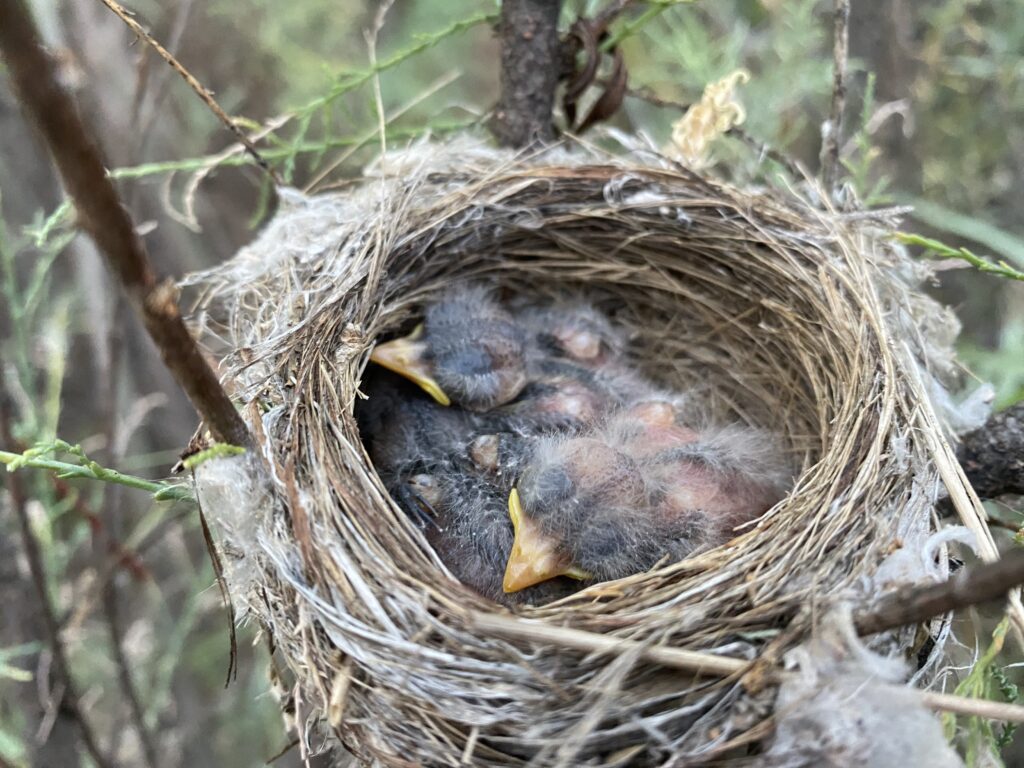
After about two weeks the babies are nearly adult size and can fly short distances. Fledglings leave the nest and begin to explore and learn to catch food. They stay near the nest while the parents still care for them for another week or two until the chicks are independent. Some pairs will try nesting again, especially if something goes wrong with their first nest. In August, the flycatchers begin migrating south to spend the winter in Central America.
History
Southwestern Willow Flycatchers were once common in riparian areas of the desert southwest. They can still be found across their historic range but a lot of their habitat has been lost, broken up, or is not as good for the flycatchers as it used to be. Another threat facing Southwestern Willow Flycatchers is nest parasitism by brown-headed cowbirds. Cowbirds lay eggs in the nests of smaller songbirds, fooling them into hatching and caring for their young. Cowbird nestlings grow quickly and out-eat everyone else in the nest, and it doesn’t usually end well for any other chicks. Natural pressures like droughts, floods, fires, predators, and cowbirds have always been present, but these natural pressures combined with habitat loss caused their numbers to drop. In 1995 the Southwestern Willow Flycatcher was federally listed as endangered.
Virgin River Program and the Southwestern Willow Flycatcher
The Virgin River Program brings partners and agencies together to protect native wildlife along the Virgin River while taking into account the growth and needs of local communities. The Virgin River Program is helping fund flycatcher population and habitat studies along the river. Habitat improvement projects include removing invasive vegetation such as Russian olive, and tamarisk. Washington County Weed Control is currently working with landowners to remove the noxious weed Arundo (giant reed) as well. In some areas willows have been replanted to increase native habitat. The Riverside Restoration area was one of the first areas to be replanted, and willows have had some time to regrow. Flycatchers have begun nesting in this habitat. This is encouraging, and hopefully other restoration areas will thrive and increase native habitat not only for the Southwestern Willow Flycatcher, but other species that contribute to a healthy riparian ecosystem.