Invasive Species: Tamarisk
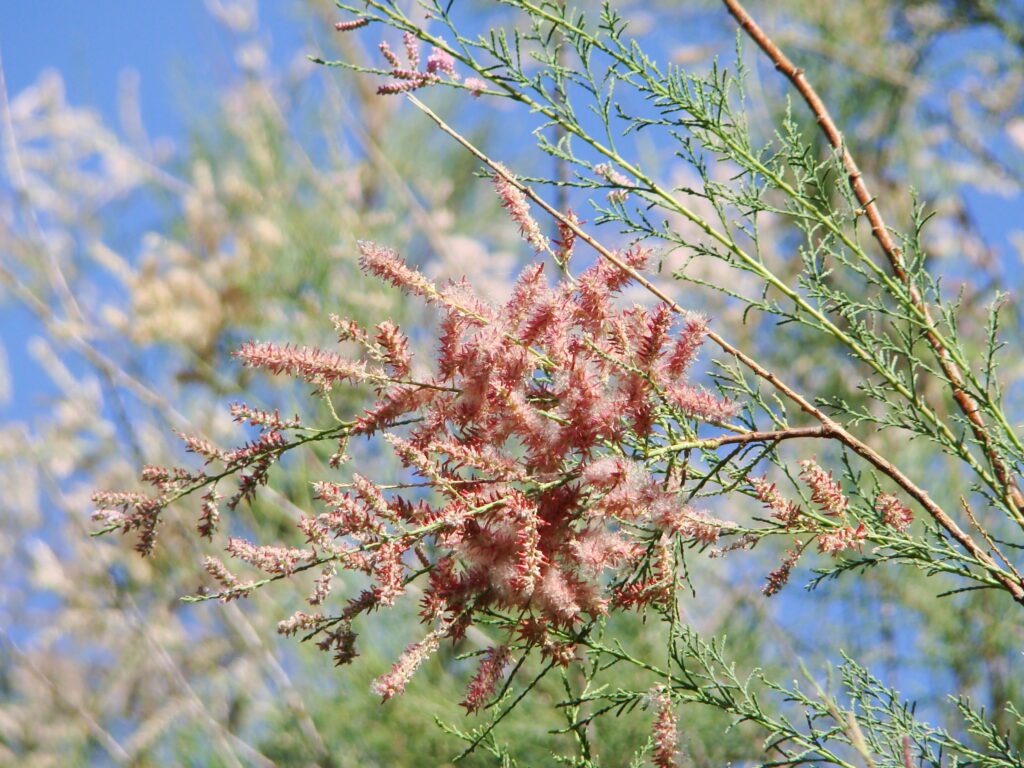
Across the western United States, wherever you find water, you are likely to find a Tamarisk tree. In the 1800’s several closely related tamarisk species were brought to the United states from Eurasia as ornamental plants, and were thought to be useful stabilizing riverbanks or acting as windbreaks.
Why are Tamarisk a Problem?
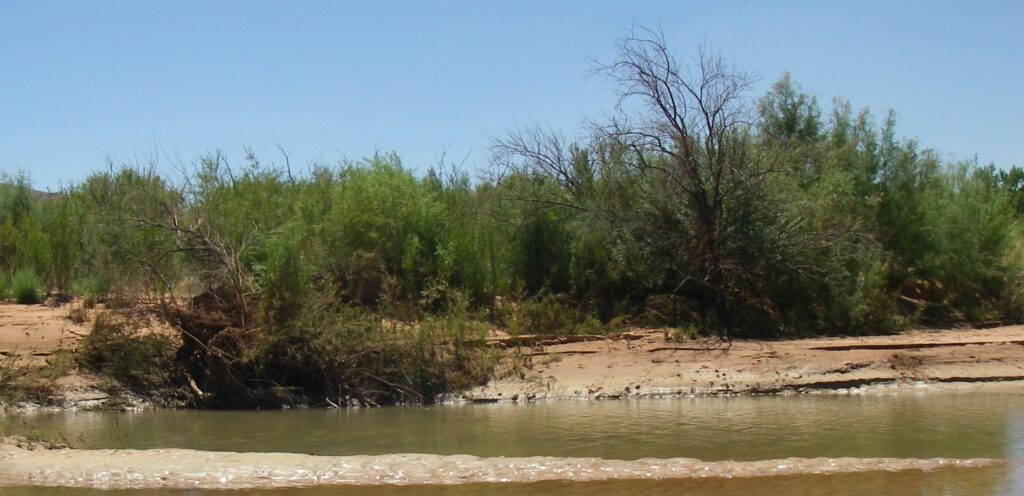
Tamarisk will aggressively colonize new areas, especially when fire, flooding, or human activity disturbs native vegetation. Tiny seeds with fluffy tufts can travel many miles by wind or water, and will start to grow wherever a seed drops on wet ground. One plant can produce more than 500,000 seeds per year. Tamarisk often grow very close together forming dense thickets. This can increase wildfire risk due to flammable oils they contain. Dense tamarisk stands can change the way a river flows, complicating issues with flash flooding. When tamarisk crowds riverbanks, it can cause the river to cut deep swift channels instead of meandering riffles and pools. This can impact native fish that need deep pools of slower water for eggs and young.
Tamarisk have earned the name “Salt Cedar” because they can pull salt from the soil and secrete it out onto their leaves. The salt in tamarisk leaves discourages most insects and animals from using tamarisk as a food source. As their leaves drop, the higher salt levels prevent other plants from growing under the tamarisk. Fewer native plants means fewer animals and insects that depend on those native plants.
Tamarisk are also a very thirsty plant, requiring up to 200 gallons of water. While native species, such as Cottonwood, also need a similar amount of water, tamarisk crowd together closer than native trees do. This means that a stand of Tamarisk will use a lot more water than a stand of Cottonwood. Tamarisk have very deep taproots, growing down as far as 100 feet to search for water. They often pull enough water to lower the water table below the level native plant roots can reach, eliminating even more native vegetation.
What is being done?
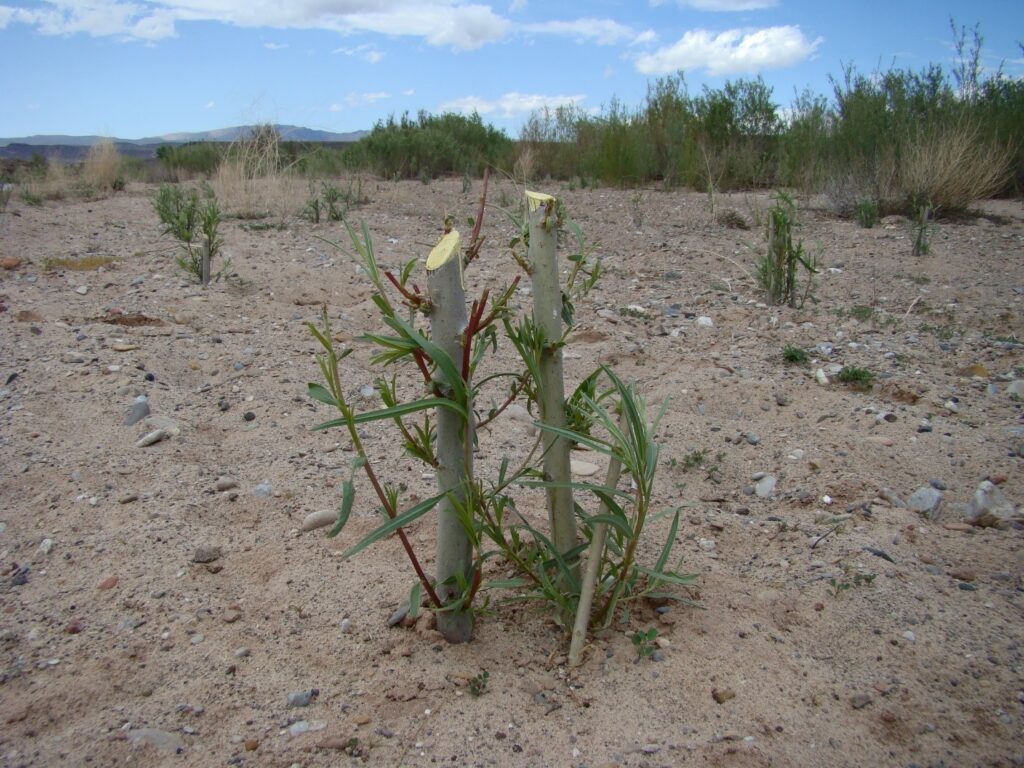
Tamarisk has spread so widely across the west that eradicating it completely is not possible. The most effective way to remove tamarisk is to cut it down and apply a herbicide to the roots to prevent re-sprouting. Native vegetation can then be replanted before tamarisk can recolonize the area.
Tamarisk does not usually form dense monocultures in its native habitat, in part because there are diseases and insects that have evolved with tamarisk that control the population. In 1999 tamarisk leaf beetles were released as a bio-control. Tamarisk beetles feed almost exclusively on tamarisk, both in larval and adult forms. They reproduce in large enough numbers to defoliate large patches of tamarisk. Tamarisk beetles can have between 3-4 generations a year, so in some places plants are loosing their leaves several times a year. This doesn’t kill a tamarisk right away, but it weakens the plant which usually stops a tamarisk from flowering and developing more seeds. After several years of defoliation some tamarisk plants will die back, allowing some native vegetation to grow between the surviving tamarisk.
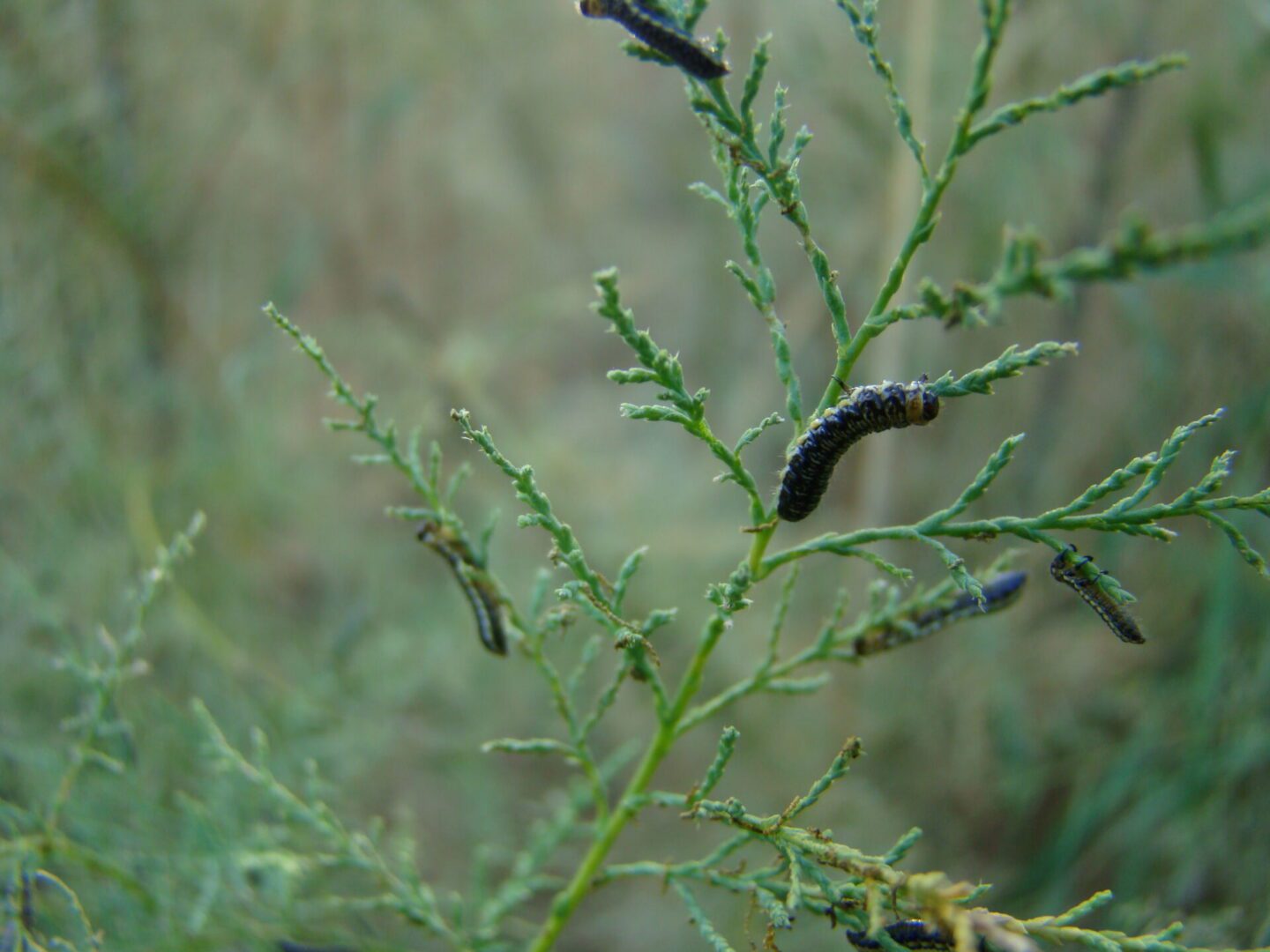
Tamarisk beetle larvae feeding on tamarisk leaves. 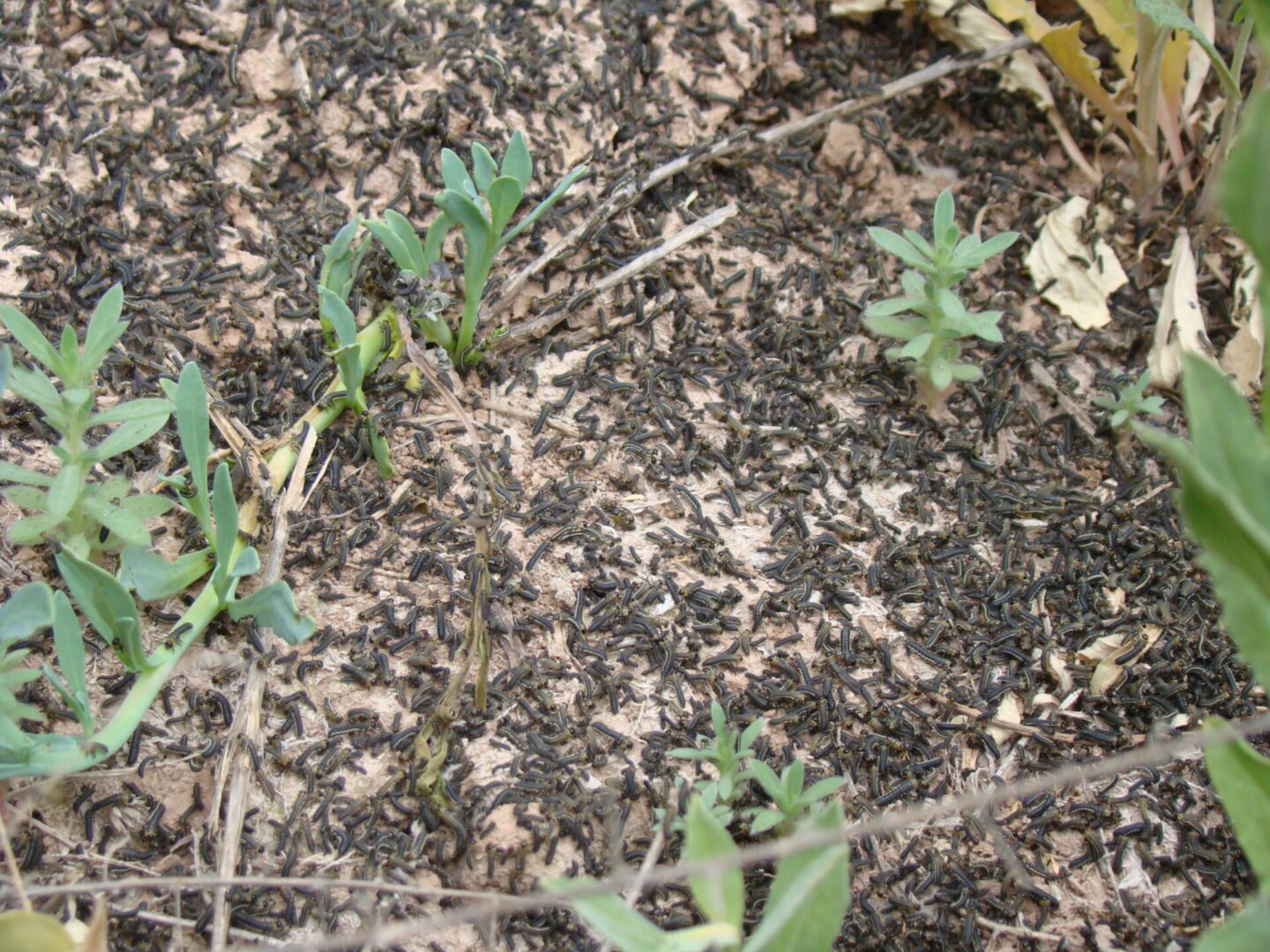
Tamarisk beetle larvae along the Virgin River. Tamarisk beetles reproduce in large numbers and can quickly defoliate an area. 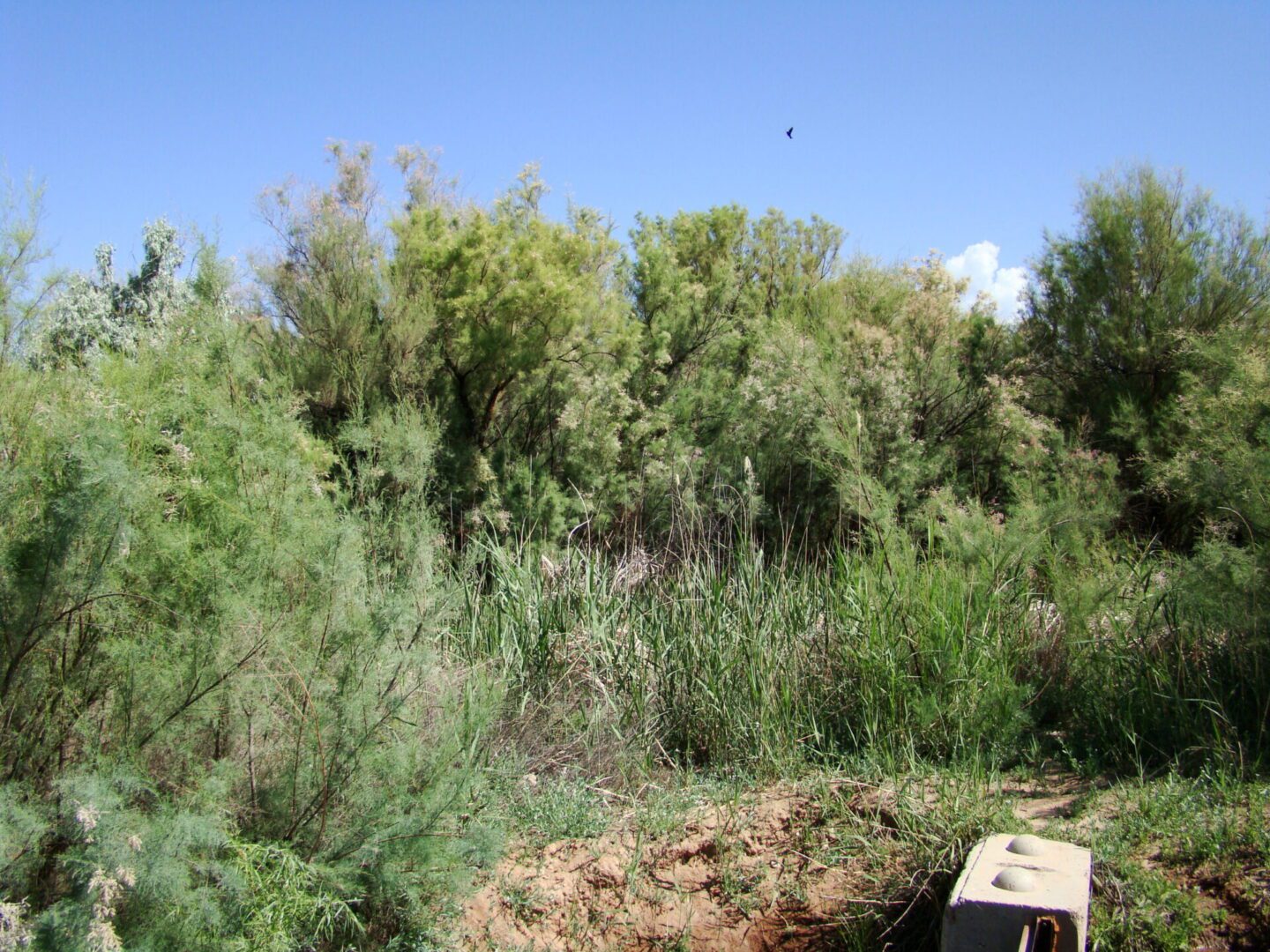
Tamarisk trees before tamarisk beetles eat the leaves. 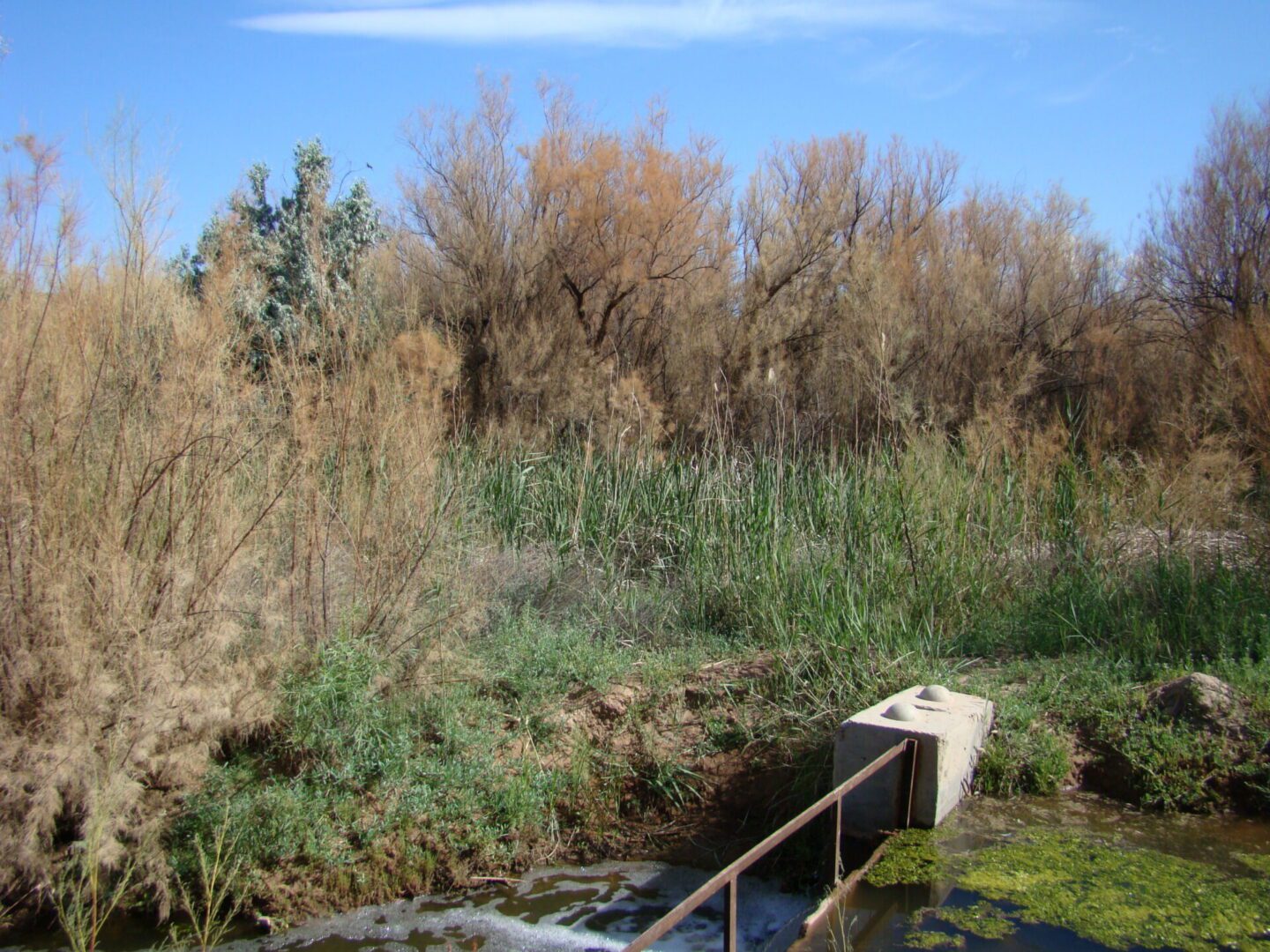
Tamarisk trees after beetles have eaten the leaves. 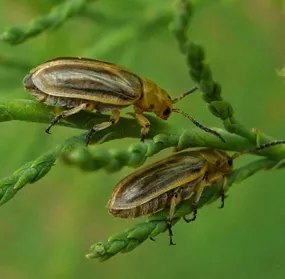
Northern tamarisk beetles at Dinosaur National Monument. Source: NPS
The endangered Southwestern Willow Flycatcher will often build nests in tamarisk trees, complicating native vegetation restoration efforts. Tamarisk provides dense cover that the flycatchers often seek out, however if tamarisk beetles defoliate an active nest tree it can expose the nest to high temperatures and make the nest more visible to predators, often leading to nest failure.
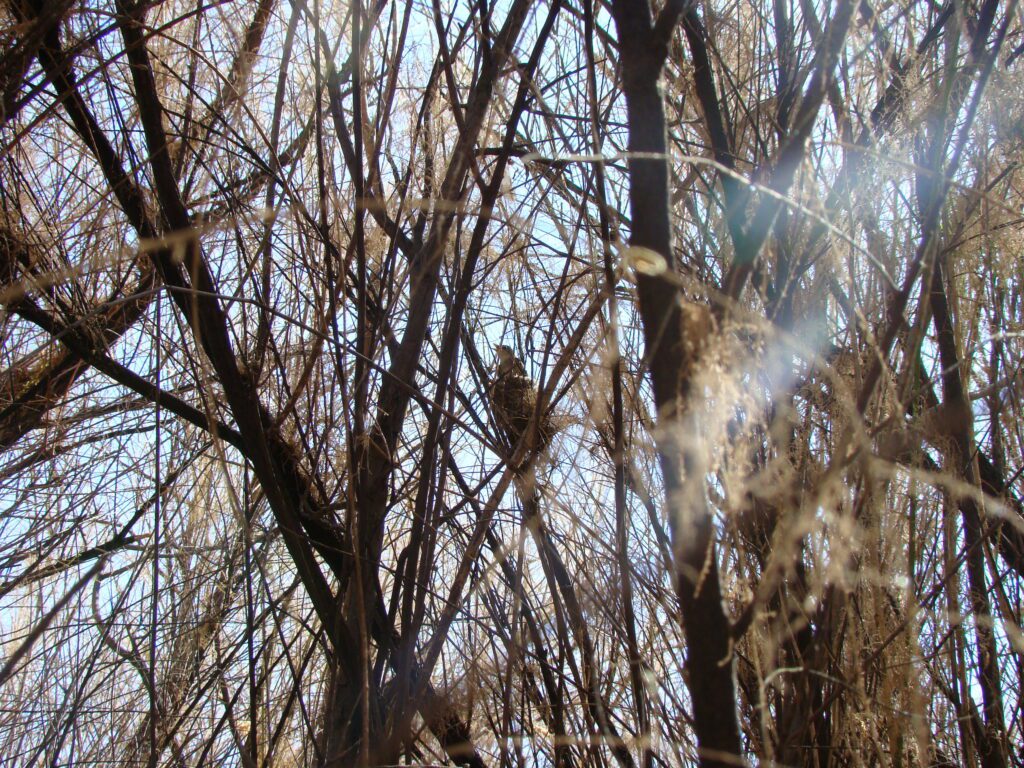
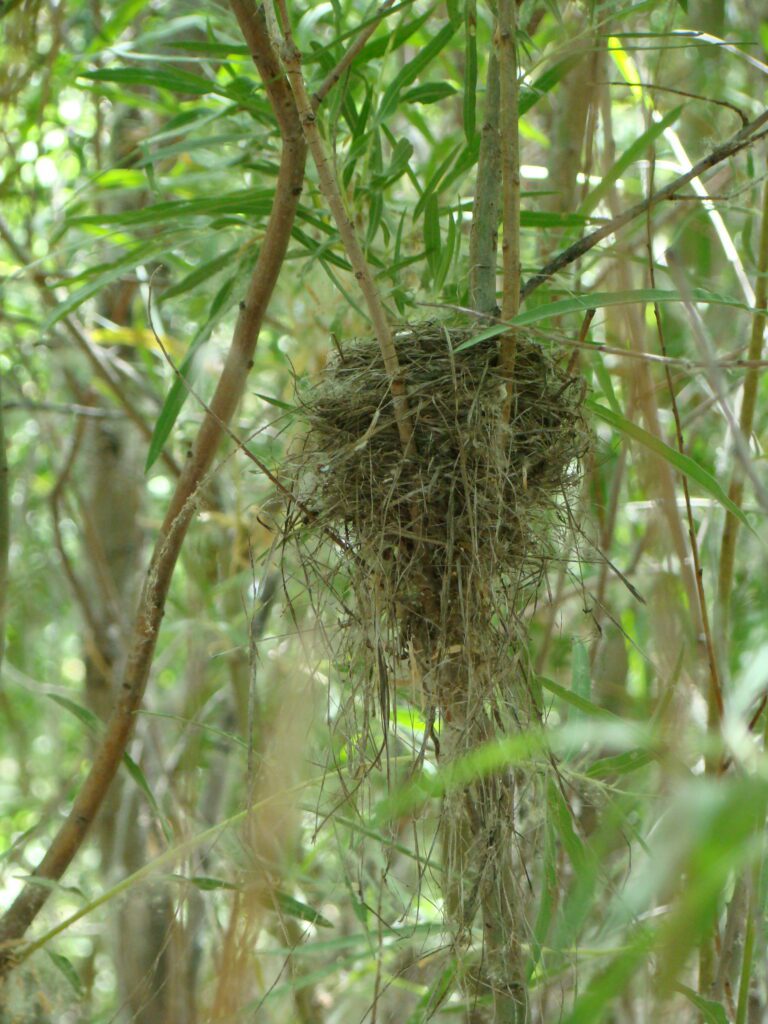
More than 100 riparian restoration projects have been conducted in Washington County in coordination with the Virgin River Program and its partners. Tamarisk and Russian olive trees are cut down and herbicide applied to the roots to prevent re-sprouting. Coyote willow cuttings are planted in areas adjacent to water where the water table is high enough. Restoring natural vegetation not only provides suitable nesting sites for willow flycatchers, it helps the river settle into natural flow patterns. This shift benefits native fish and many other species that depend on healthy river ecosystems.