Flash Flooding and the Virgin River

For most of the year the Virgin River is shallow enough that you can easily wade across without swimming. However, during rainstorms, surrounding desert bedrock, thin soil, and sparse vegetation isn’t able to absorb heavy rainfall, and water can quickly gather into dangerous, high-speed runoff that flows into the river and its tributaries. When this happens, the Virgin River can swell over 60 times its normal size in minutes. While summer monsoons cause most flash floods in the Southwest, isolated storms can cause flooding at any time of the year. Warm spring temperatures or rain-on-snow events sometimes cause mountain snow to melt rapidly.
It is surprising to think this little river moves between 1-3 million tons of mud, sand, and rock out of Zion National Park each year. Most of this sediment is moved during flash flooding. Fast moving water can carry more sediment and debris than calm water can. If you’ve been near a large flash flood you can even hear boulders grinding against each other as they are rolled downstream by the force of the water. Flooding can alter the path of the river as it eats away at the riverbank in places and drops sediment where water is slower.
On August 31, 2026, the Virgin River rose from 35 cubic feet per second (cfs) to nearly 6,000 cfs, rising about 2 feet in the first 10 minutes, and another 4 feet the next 15 minutes. A gauge and camera located just downstream of Zion National Park’s Visitor Center recorded this time lapse series of the flood. (Photos are 5 minutes apart).
People along the Virgin River have always battled periodic flooding. In January 1862, weeks of relentless rain triggered a massive flood that destroyed the original town of Grafton and several smaller settlements. Among the survivors was a newborn delivered as his mother fled the rising waters. His mother named him Marvelous Flood Tenny. Although settlers rebuilt Grafton further upstream on higher ground to protect their homes, frequent floods continued to wipe out their crops, and river sediment constantly clogged their irrigation ditches. Ultimately, this relentless cycle of flooding forced residents to abandon Grafton. Flooding can be unpredictable, as areas surrounding the Virgin River do not all receive the same level of rainfall equally. As recently as October, 2026, a wash that enters the Virgin River in Hurricane, Utah flooded the same neighborhood twice in six weeks, a wash that historically only floods every 20 to 30 years.
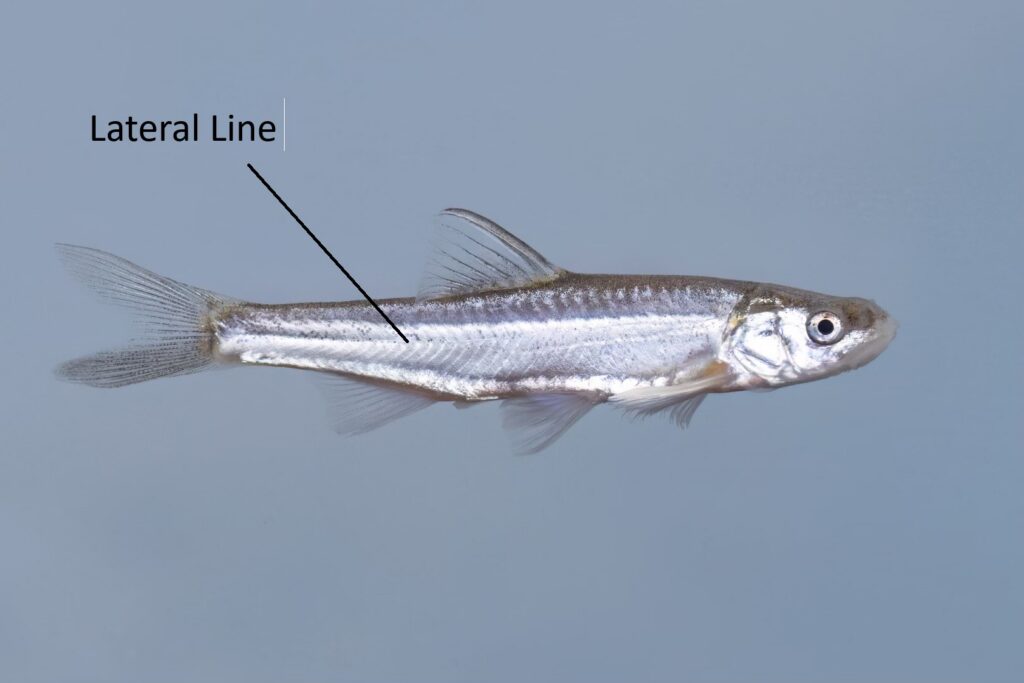
Flash floods may seem destructive, but native vegetation and wildlife have adapted to survive these extreme conditions. Fish find slower water (e.g., slackwater on the sides of the river) to retreat to as waters rise. Native fish rely on a sixth sense to navigate muddy water called a lateral line. This line is an organ unique to fish that allows them to sense movement in water, similar to the way we can feel wind moving hair on our arms. Scouring of the river during flooding improves habitat for native fish. Higher flows in the spring trigger spawning while depositing sand and gravel fish need for laying eggs. Fresh sediment contains nutrients that feeds new plant growth. Plants, like willow,
survive floods with flexible stems that can bend with the water and lift up again as the water lowers. Beaver living along the mainstem of the Virgin River have adapted to frequent flooding by digging burrows into the banks instead of building a dam or lodge that would be washed downstream. Dams built along tributaries and smaller inflows help slow flooding.
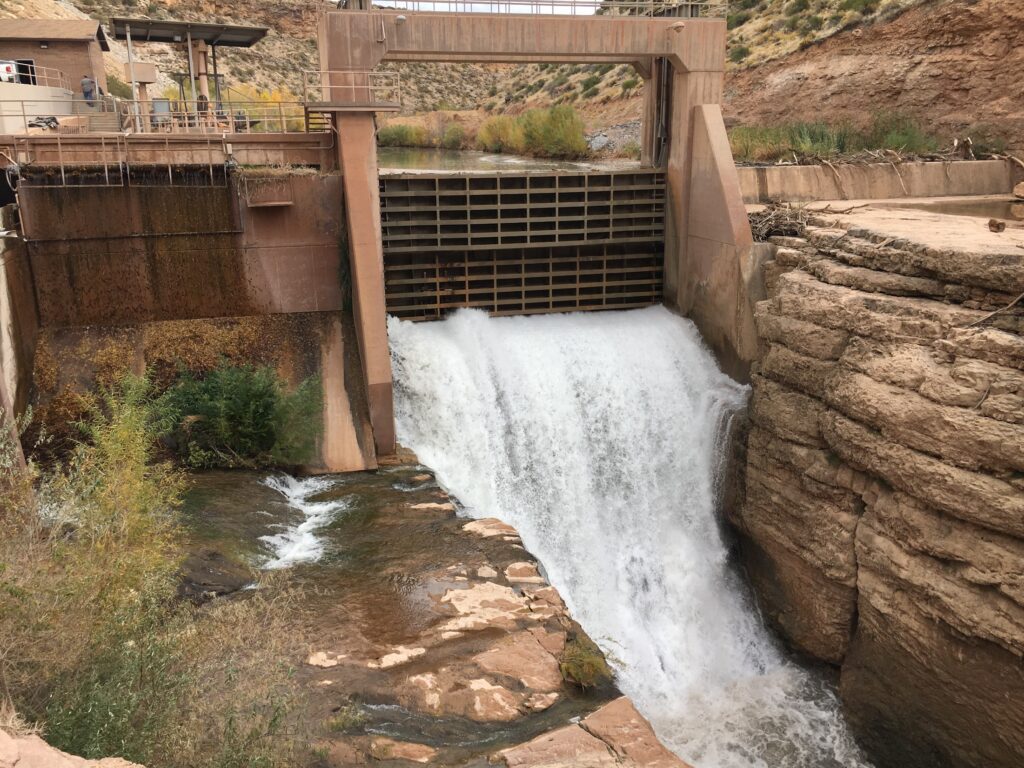
Living next to a wild, flood-prone desert river means teaming up with nature instead of fighting it. We depend heavily on these rivers for water we need every day, which means we have to respect the fierce, sudden power of flash floods and plan carefully around them. The above diversion dam has two gates that are lowered under normal conditions. Some water is diverted for use by local communities, however, water is continually released downstream to keep the river high enough to sustain native fish below the dam. During flood events, the gates are raised to allow large amounts of water to flow downstream, and high flows are needed to periodically wash out sediment that has built up behind the dam. By using smart engineering—like dams with movable gates—we can protect our communities, care for local wildlife, and work hand-in-hand with the river’s natural cycles to thrive safely.